

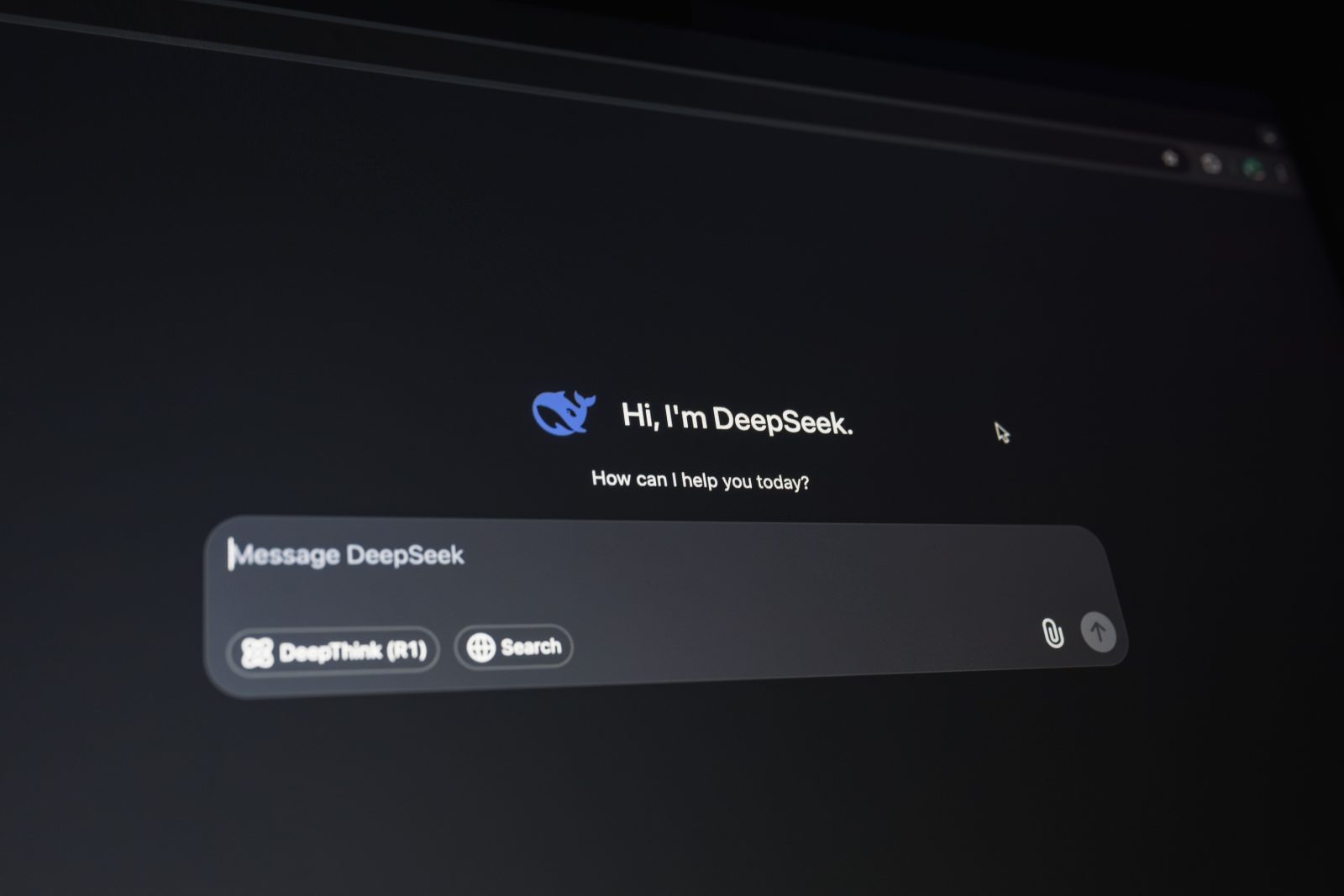

DeepSeek has done something few labs admit in public: it is folding its Pro tier into Flash. On 10 September 2026 the company launched DeepSeek-V4.1-Flash — a 552B MoE with a new Causal Encoder–Decoder stack — and said multi-party tests put Flash ahead of V4-Pro on performance, cost, speed and total runtime. From 04:00 UTC on 14 September, deepseek-v4-pro requests route to V4.1-Flash at Flash rates until a V4.1-Pro lands.
The architecture story matters if you care about AI answers, not just leaderboard screenshots. Flash activates 8B parameters on input and 16B on output, compresses the global KV cache to roughly a quarter of V4-Flash’s HBM footprint, and ships native multimodal support under the production ID deepseek-flash. Legacy deepseek-v4-flash and vision-exp aliases temporarily point at the new model. Peak/off-peak pricing stays; off-peak is half of peak.
For SEOs watching China AI search, this is infrastructure news dressed as a model card. Agentic retrieval — long prompts, tool loops, citation packs — is exactly the workload DeepSeek says it redesigned Flash for. When the cheap tier beats the expensive one on latency and cache cost, every Bing-style answer product and every third-party RAG stack that proxies DeepSeek gets a quieter unit-economics upgrade. That usually shows up as more answer volume, not less.
Caveats apply. DeepSeek’s own migration notes and third-party write-ups (see SiliconFlow’s API migration guide) warn that prompt behaviour, tool calling and reasoning length still need retesting after the ID swap. Some hosts kept V4-Pro as a separate billable option after the original phase-out messaging softened. Treat vendor “Flash beats Pro” claims like any other A/B: useful signal, not gospel.
Practical takeaway for international SEOs: if your monitoring stack or content ops lean on DeepSeek for Chinese-language research, summarisation or answer prototyping, pin deepseek-flash, re-run your evaluation set, and watch whether answer SERPs that cite your pages get hungrier for structured, extractable facts. Cheaper long-context agents tend to pull more sources — when they bother to cite at all.
One more operational detail SEOs tend to miss: cache-hit pricing. DeepSeek’s own announcement dwells on KV-cache compression because agent traffic is input-heavy — system prompts, retrieved chunks, tool transcripts. If your evaluation harness dumps huge contexts into every call, Flash’s smaller persistent cache is where the invoice moves, not the headline output rate. Partners such as WorkBuddy/CodeBuddy and OpenCode were called out as day-one compatible; if your stack sits behind a reseller, confirm whether they remapped aliases or still expose a stale Pro SKU at Flash economics.
Zooming out, Flash-eating-Pro fits a wider China AI pattern we already see in search products: the “fast” tier becomes the default surface once latency and cost beat brand hierarchy. Yandex’s Alice answers and Naver’s AI Tab followed similar gravity. DeepSeek is applying that logic to the API catalogue. Watch for V4.1-Pro’s eventual return as a true premium, not a renamed Flash — until then, deepseek-flash is the production line that matters for answer-quality tests against Baidu-era SERP features.