

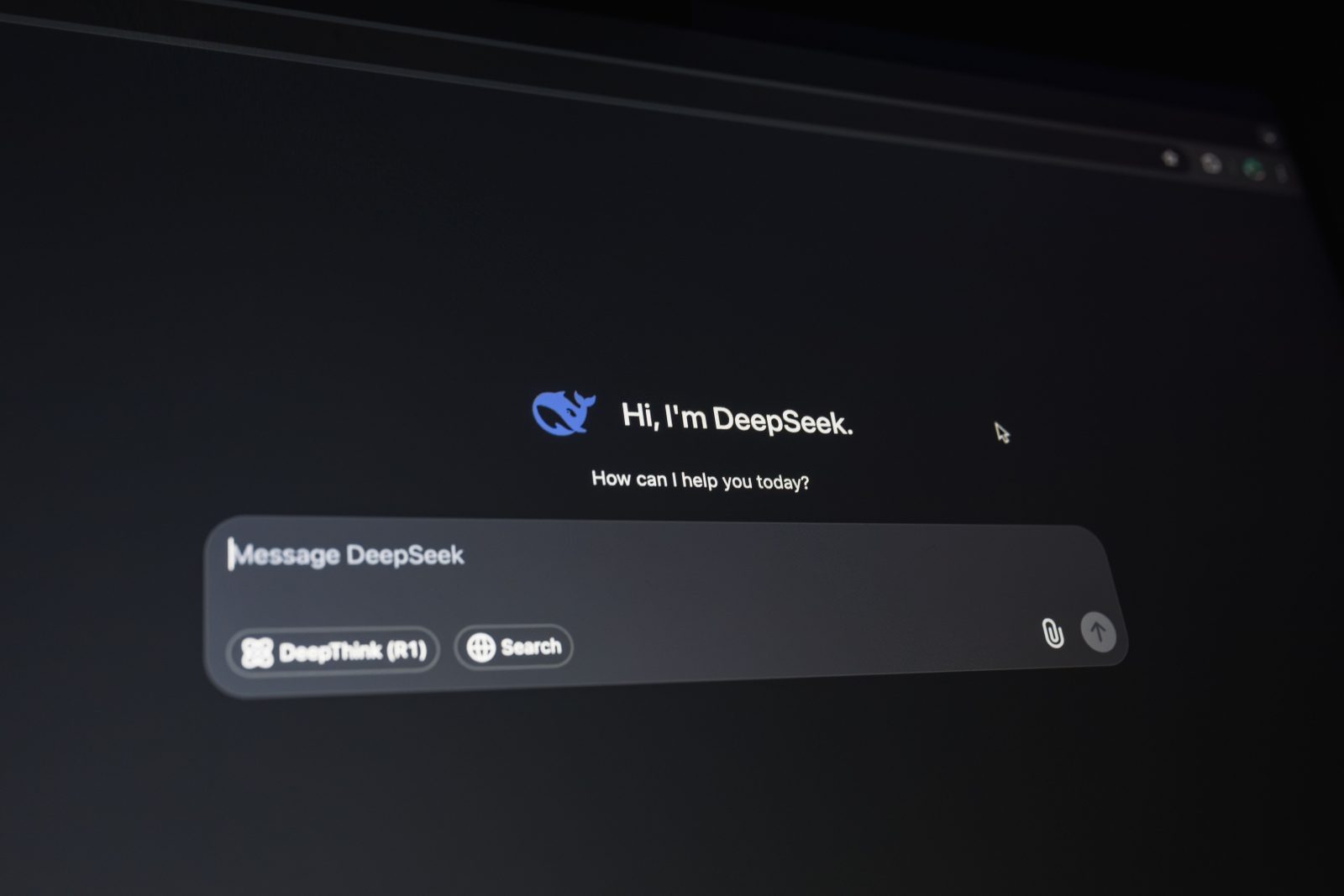

DeepSeek is rationing its consumer app. According to Jiemian, citing STAR Market Daily (科创板日报), users reported on 16 November that the DeepSeek app and web chat now show a notice saying that, because of insufficient computing power, long conversations inactive for more than seven days are no longer supported.
Users also report two other changes. The maximum length of a single input has been cut to about 40,000 Chinese characters, and there is now a daily usage quota. When it runs out, the app says that “because the server is busy, the usage quota has been reached”. DeepSeek hasn’t made a formal announcement, so these are user reports carried by Chinese tech press, not an official policy page.
Rationing the app while the API grows
The timing is what makes this notable. In the same week, DeepSeek has been expanding its developer offering hard:
- On 13 November it built web search, deep research and URL reading into its chat API, along with standalone OCR and speech services, as Tech Times details.
- GMT Eight reports standalone Search and Crawl interfaces priced at RMB 5 per 1,000 successful requests, which it says is about half what Kimi and Zhipu charge for basic search.
- Its agent product, DeepSeek Harness, reported 1.54 million daily users and 92 trillion tokens a day earlier this month.
So the free consumer chat gets less compute, while paid API traffic and search calls get more. That’s a commercial choice dressed up as a capacity problem. GPUs are scarce in China, and DeepSeek is putting them where the money is.
Why it matters for search and SEO
DeepSeek’s app has been one of China’s biggest AI “search” surfaces. People ask it questions they used to type into Baidu. Every limit on the consumer product pushes those users somewhere else. The obvious winners are Tencent’s Yuanbao (which just made its search product official), ByteDance’s Doubao and Alibaba’s Qwen app. Alibaba launched Qwen4-Max on the same day and claims the average cost per task is down 60%.
At the same time, DeepSeek’s search index is likely to reach more products, not fewer. Cheap search and crawl APIs mean thousands of Chinese apps and agents may ground their answers in DeepSeek’s index without ever showing a DeepSeek logo. Tech Times reports that DeepSeek’s search scores results for relevance, authority and freshness, and claims to filter SEO spam and GEO manipulation. The index also hasn’t published a crawler user agent.
My take
Don’t read this as DeepSeek fading. Read it as DeepSeek changing what it is: less a consumer chatbot, more search and model infrastructure. For brands targeting China that means two things:
- Track AI visibility across several assistants. Yuanbao, Doubao, Qwen and ERNIE Assistant are all gaining as DeepSeek’s app tightens. A brand audit that only checks DeepSeek’s chat is now incomplete.
- Treat DeepSeek’s index as infrastructure. Make sure your Chinese-language pages are crawlable, clearly structured and authoritative, because the “authority tier” DeepSeek assigns to your host may decide whether hundreds of downstream apps cite you.
If the quotas become permanent, expect DeepSeek to launch a paid consumer tier soon. Either way, it’s a sign of how tight compute in China has become.
