
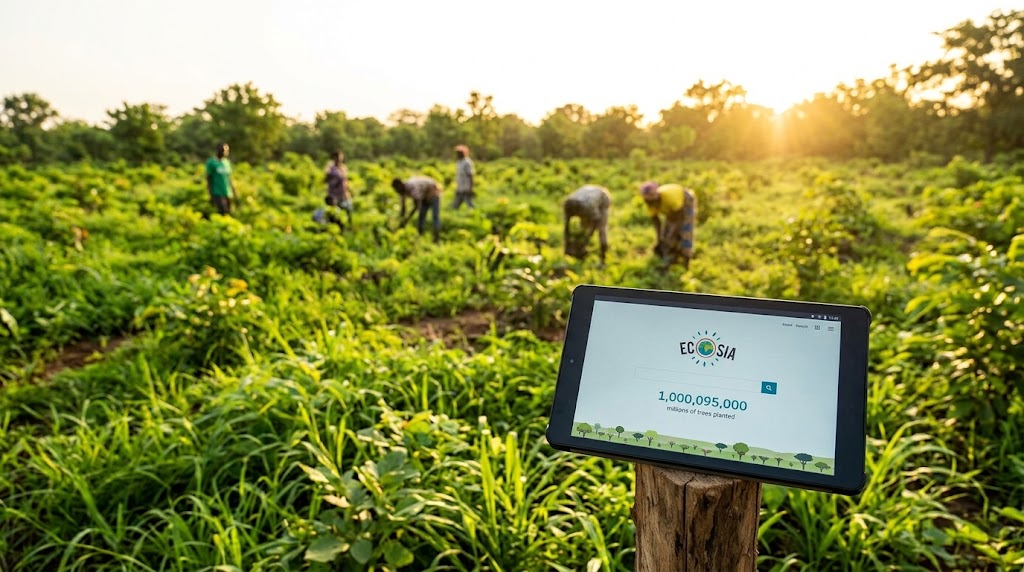

Ecosia says German users are now getting results from EUSP — the European Search Perspective joint venture with Qwant. France came first in 2025; Germany is the second market on the home-grown index, with a plan to answer a majority of German queries from it by year-end. Ecosia’s own framing is blunt: nearly all European queries still come from two non-European “kitchens”, and EUSP is meant to be another kitchen, not another restaurant logo in the food court.
Heise reports the German index holds roughly a billion pages and that Ecosia will ramp its own-index share gradually rather than flipping a switch. Third parties can tap the same corpus through Staan (Search Trusted API Access Network). Ecosia CEO Wolfgang Oels told Heise several customers already use the French index. The 30 July 2026 Ecosia blog post adds the sovereignty pitch — EU hosting, GDPR posture, and a nod to export-control shocks that made “US-only AI terms” a board-level risk for European builders.
Why care if you are not planting trees? Because most “alternative” European engines still rent Bing or Google under the hood. An EU-hosted index with its own ranking — however early — is infrastructure news, especially for AI apps that need grounding data without US-only Terms of Service drama. Compare to Brave’s independent Western crawl or Seznam’s Czech national index: EUSP is trying to be continental, not niche, which is harder and more interesting.
For SEOs: do not expect overnight ranking systems you can game. Do expect another crawler and another API consumer of European web content. Watch robots, crawl logs, and whether Staan customers surface your pages in AI answers. Also expect uneven quality during the ramp — Ecosia is explicit that users “won’t notice a big difference” at first, which is both a UX promise and a warning that Bing will still carry a lot of queries while the mix shifts.
Caveat: digital-sovereignty marketing is not the same as index parity with Google. Treat EUSP as a multi-year build you should instrument now (crawl allowance, hreflang/language clarity for DE/FR/EN, clean extractable passages), not as a 2026 traffic jackpot. Pair this post with Staan’s developer FAQ and the EU Vetted scorecard on who still resells Bing.
Agencies pitching “European search diversification” should update their decks with the Germany live date and the year-end majority-query target — then immediately add the caveat that ramp plans slip. Clients hear “own index” and imagine overnight ranking volatility; operators hear “gradual mix shift” and plan crawl capacity. Those are different conversations. Put both sentences in the same slide.
Also watch how publishers react if Staan-powered AI apps start citing aggressively without familiar Google-referral patterns. Referral string chaos is coming either way; the responsible move is log-based detection of new EU crawlers and a polite robots posture rather than panic blocking. EUSP’s success depends on being a usable library, not a empty sovereignty slogan.
Heise’s billion-page figure is a snapshot — verify crawl coverage for your own domains rather than assuming inclusion.