

Yandex Open-Sources Perforator, A Continuous Profiling Tool

Yandex has released Perforator as an open-source tool. It’s used internally to analyze the performance of most of the company’s services, including large-scale systems.

Perforator is a continuous profiling tool. It helps developers find performance issues in their applications by collecting and analyzing runtime data.

There are two main ways to use the tool. The simplest method is to run Perforator locally. Users can download or build the binary, then run the command:

sudo perforator record -a --duration=60s

After 60 seconds, the tool automatically opens a profile report in the browser.

For more advanced use cases, Perforator can also run on Kubernetes clusters. This setup is more complex but designed to be straightforward. Yandex has provided documentation to help users deploy it with just a few commands.

Yandex continues to share tools used in its own infrastructure to support the broader developer community. With Perforator now open-sourced, developers have access to a production-grade profiler for monitoring performance in real time.

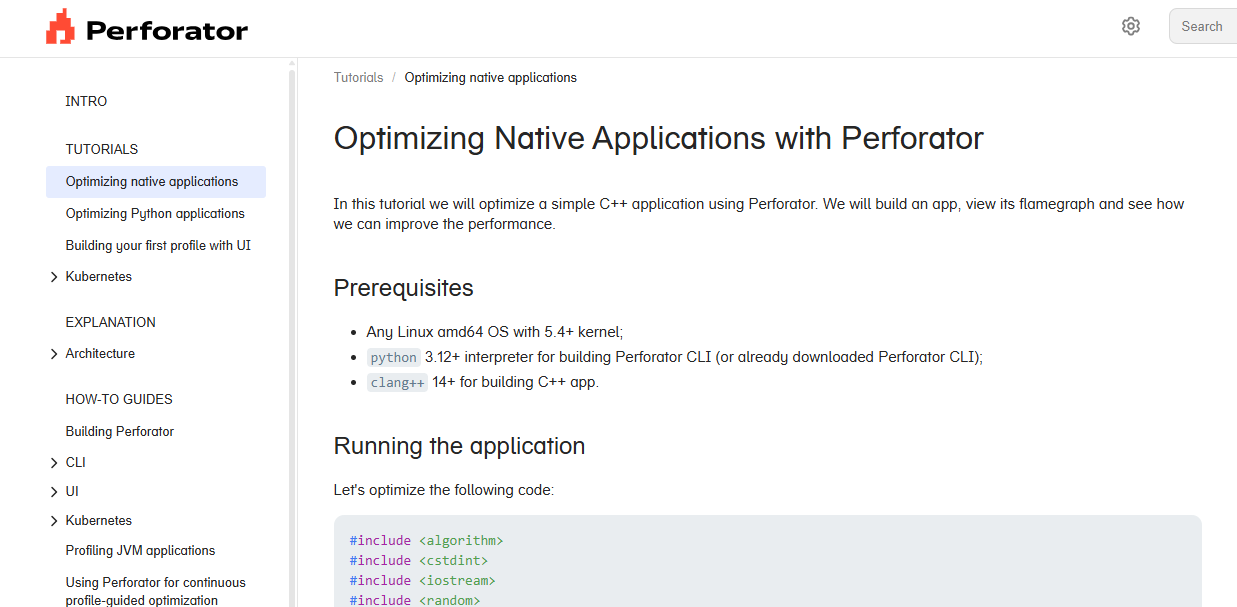
More information, setup instructions, and source code are available in the official Perforator documentation.

Dan Taylor is the founder and editor of International Search Insights (ISI), the publication behind ReadIsi, and a Partner and Head of Innovation (Search & AI) at SALT.agency. He has worked in search for more than a decade, in-house and agency-side, and is regarded as one of the West’s leading voices on search engines beyond Google, including Yandex, Baidu, Naver and Cốc Cốc. On ReadIsi, Dan covers the engines and AI answer platforms that English-language coverage tends to miss: Baidu and ERNIE, Yandex and Alice AI, Naver, Cốc Cốc, Shenma, Sogou, WeChat and Weibo search, plus DeepSeek and Alibaba’s Qwen. He also keeps dated records of documented changes, such as the Yandex, Baidu and Naver algorithm update histories and the DeepSeek, ERNIE and Qwen model update histories. His approach is to take learnings from global search engines and apply logic with a high evidence threshold. A claim needs a source, patterns seen in one market are treated as a hypothesis until they are checked in another, and where the evidence is thin he says so. For brands, that means advice built on what can be shown, with measurement that separates being cited from being chosen. Dan is credited with coining the term “edge SEO” and won the inaugural TechSEO Boost research competition in 2018 for his work on CDN and edge changes for SEO. In 2026 he was credited with coining “Infinite Tail” to describe how keyword research is changing with AI search. He is the author of AI Search Marketing For The Travel Sector, writes for Search Engine Journal, Search Engine Land and Travel Marketing Guy, and has advised technology, SaaS, travel and enterprise ecommerce brands, including Cloudflare, GitLab and Airbnb. He has given multiple talks and panels at the International Search Summit in Barcelona, and has also spoken at Optimization Moscow, brightonSEO, Google Search Central Live Deep Dive Asia in Bangkok, Athens SEO and the Asia SEO Virtual Summit 2026, where his talk looked at how Baidu, Naver, DeepSeek, Tencent, Cốc Cốc and Yandex built their own AI answers.