


Every China SEO deck opens with Baidu share. Fair enough: StatCounter’s September 2026 mobile cut still has Baidu around 60%, with Yandex, Bing, Haosou and Sogou fighting over the rest. Shenma barely registers on some public charts. So why write about 神马 at all?
Because share ≠ opportunity mix. Baidu is the mass-reach, analytics-rich default. Shenma is the Alibaba/UC mobile lane where product intent and browser distribution collide. International brands that only “beat Baidu” keep rediscovering that Chinese mobile users do not live inside one query box.
What the numbers actually say
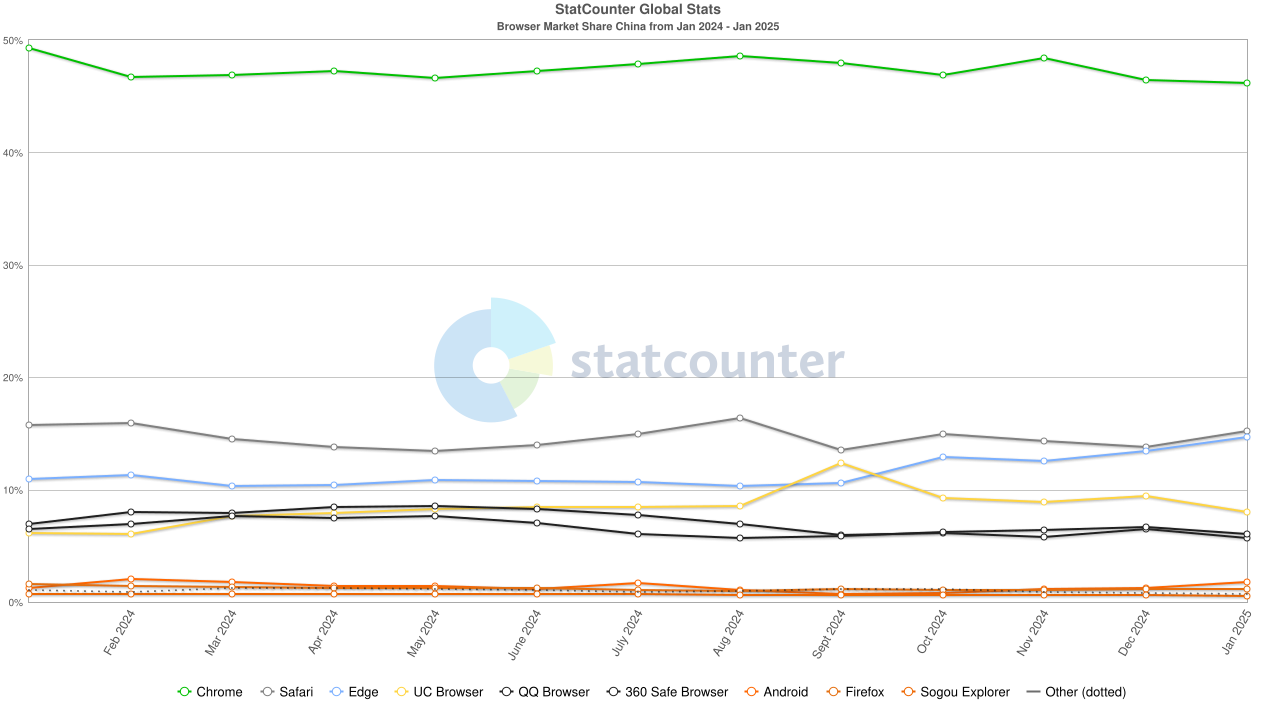
Statista’s January 2025 pageview snapshot listed Shenma near 2.8% — small, but named. Later monthly StatCounter views often bury it under “Others” while Baidu rebounds. That inconsistency should make you suspicious of any slide that treats public panels as gospel for browser-bundled search. UC’s own traffic share still matters as a distribution shell; see our China browsers 2025 note for the wider browser context.
Baidu, meanwhile, is not standing still. It is shipping AI answer surfaces and even AI traffic analysis in webmaster tools — complete with brutal citation-to-click ratios we unpacked in the 1M citations / 39 clicks reality check. Comparing “Shenma blue links” to “Baidu 2019 blue links” is already the wrong frame.
Product gravity vs portal gravity
Baidu’s moat is portal gravity: Baike, maps, Tieba, Baijiahao, and now ERNIE-flavoured answers. Shenma’s moat is ecosystem gravity: UC Browser habits plus Alibaba commerce adjacency. English market primers still call Shenma out as mobile- and shopping-oriented (CMC’s engine guide, Chinafy). Taobao/Tmall listings get preferential oxygen on product queries; open-web publishers fight for guides, brand, and B2B detail.
That is why a head-to-head “rank #1 on both” KPI is lazy. On Baidu you may win an informational cluster with Baijiahao amplification. On Shenma you may win the same topic only if the mobile page is flawless and you are not invisible inside Alibaba’s product pack. Different games, same week in the content calendar.
When to prioritise Shenma over another Baidu tweak
- Your referral logs already show meaningful UC / sm.cn traffic.
- You sell SKUs that live naturally on Tmall/Taobao and need trust content on the open web.
- Creative and landing pages are mobile-native; desktop PDFs are not your growth lever.
- Baidu is stuck in diminishing returns on brand terms while competitors own UC mindshare.
When not to: you have zero China hosting story, no webmaster verification capacity in Chinese, and no commerce presence. Fix Baidu fundamentals and ICP/hosting first — Shenma will not rescue a site that fails in-country.
Opinion
Calling Shenma “irrelevant” because it is not 60% is how Western teams sleepwalk into Alibaba-shaped blind spots. Baidu remains mandatory. Shenma remains situational — but situational for a huge mobile commerce culture is still material. Run both webmaster platforms, compare crawl health, and judge success on assisted mobile conversions, not on whether StatCounter bothers to print the name.
