

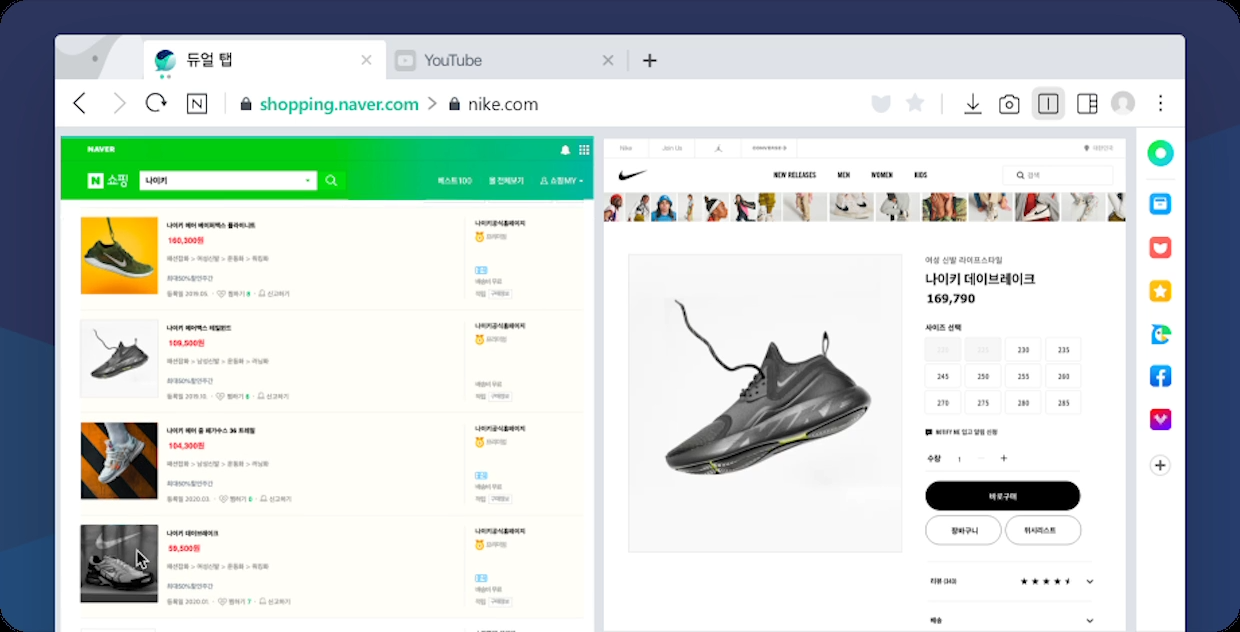

Naver’s Whale browser, developed by Naver Corporation, is a South Korean web browser that first launched in 2017. It is built on the Chromium engine, making it compatible with Chrome extensions and offering features unique to the Korean market.
Notable functionalities include integrating Naver’s Papago translation service, Omni-Tasking (a split-screen feature that allows for browsing two pages in one tab), and Whale On, a video conferencing platform.
Whale also supports local services like the Hangul Viewer, tailored for viewing Korean document formats.
Whale has gained a significant foothold in South Korea, with a market share of around 7.6% as of late 2023. While it still lags behind the dominant Google Chrome (54.1%), Naver is working to increase Whale’s presence domestically and internationally.
The company is planning a global rollout, targeting Southeast Asia and Latin America markets. This expansion is part of Naver’s strategy to compete with major browsers and strengthen its presence in sectors like smart devices and virtual reality
Omni-Tasking for Enhanced Multitasking
Whale browser introduces a unique Omni-Tasking feature, allowing users to view and interact with two websites within the same tab.
This functionality is particularly useful for users who need to multitask or compare content side by side without switching between tabs. It enhances productivity by making it easier to manage multiple tasks simultaneously.
Integrated Naver Services
Whale seamlessly integrates with popular Naver services, including the Papago translation tool, which provides quick and accurate multilingual translations.
It also includes the Hangul Viewer, enabling users to view Korean HWP files directly within the browser. These integrations make the browser highly functional for everyday tasks in the South Korean digital environment.
Built-in Video Conferencing with Whale On
One of Whale’s key features is Whale On, a built-in video conferencing tool. This eliminates the need for third-party apps, allowing users to conduct virtual meetings directly through the browser.
The feature makes the browser versatile for both personal and professional use, supporting seamless online collaboration.
Cross-Platform Synchronization
Whale offers cross-platform synchronization, meaning that users can access their bookmarks, history, and extensions across multiple devices, whether on mobile or desktop.
This ensures a unified user experience and makes it easy to pick up where you left off, regardless of the device you are using.
Privacy, Security, and Customization
Built on the Chromium engine, Whale supports Chrome extensions and offers enhanced customization options. In addition, the browser prioritizes user privacy by including features like ad and tracker blocking. Regular security updates further ensure that users are protected while browsing.
Whale’s combination of productivity-enhancing features, local service integration, and privacy-focused design makes it a powerful alternative in the browser market, with increasing appeal both in South Korea and globally.
Header Image Credit: https://whale.naver.com/
