
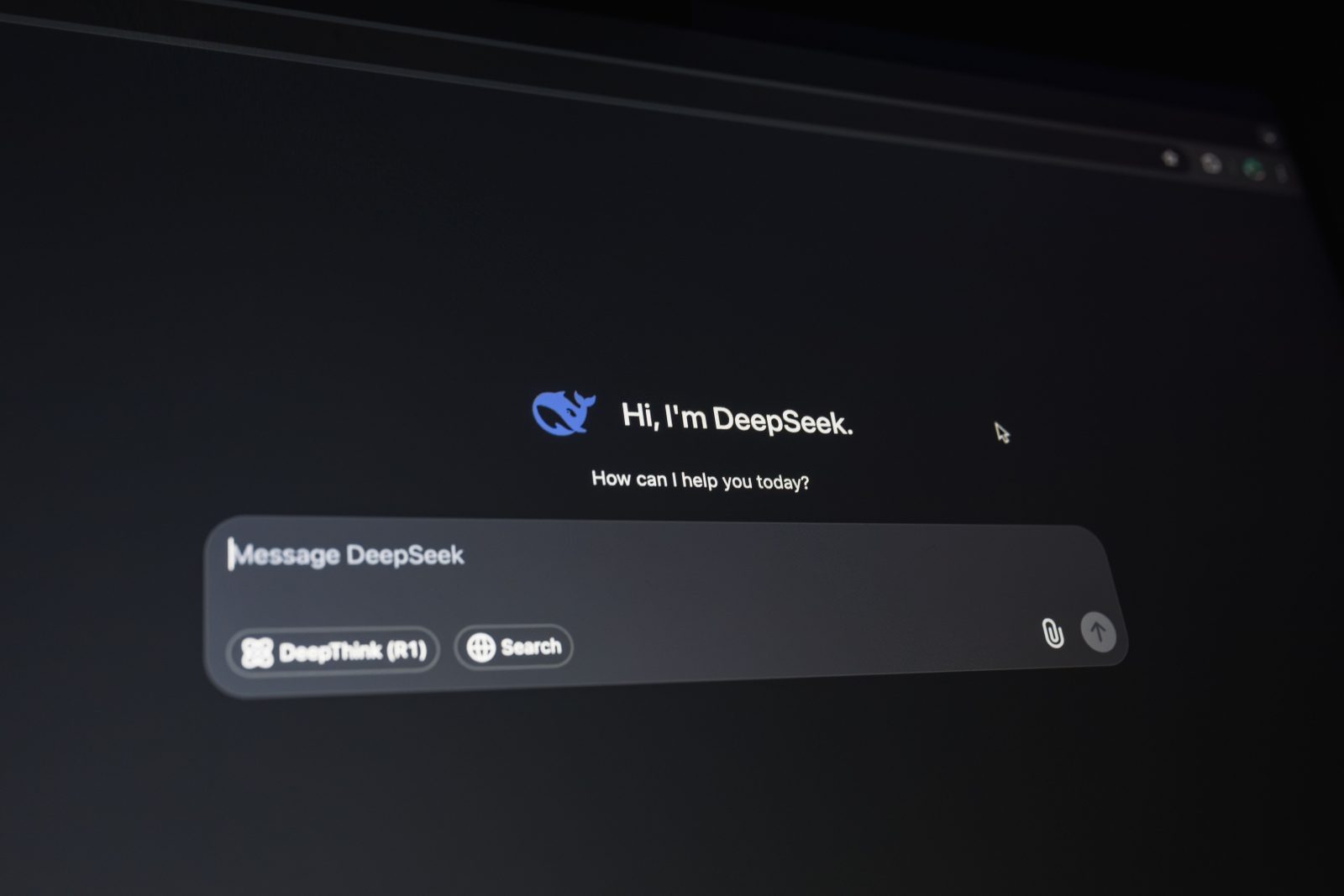

One of the sites Chinese AI assistants cite most often now owns a small piece of one of the biggest assistants. Zhihu, China’s largest Q&A platform, said in a voluntary announcement to the Hong Kong exchange on 23 November that a fund it backs has invested indirectly in DeepSeek. Through that fund it now has an exposure of “a low single-digit percentage” of DeepSeek’s equity.
This is not a strategic partnership, a data deal or a search integration. But if you do GEO in China, the cap table between the content and the answer engine just got a little shorter, and that deserves a closer look.
What Zhihu actually disclosed
The filing is short. Zhihu’s board says the fund, Tianjin Lisi Xingshen Equity Investment Partnership (天津礪思星深股權投資合夥企業), “has indirectly invested” in Hangzhou DeepSeek Artificial Intelligence Basic Technology Research Co. through an investment vehicle and obtained a low single-digit percentage stake. The group’s partnership interest in the fund is “less than 30%”.
The board’s reasoning is boilerplate: the investment fits its strategy of widening access to quality AI companies through the fund and deepening its understanding of “AI technology, product evolution and business model development”. The announcement contains no mention of data licensing, search or Zhihu content.
National Business Daily fills in the background. Zhihu announced on 6 September that it would commit ¥1.5bn of its own cash to this fund through its subsidiary Beijing Zhizhe Tansuo Technology (北京智者探索科技有限公司). The fund targets early and mid-stage Chinese AI companies across foundation models, infrastructure, robotics and applications. The paper also points out that Zhihu has launched its own AI products, including Zhihu Zhida (知乎直答), its AI answer search, and an expert data service. Zhihu has previously said that AI investments could bring “potential technology applications and business cooperation opportunities” for them.
The market liked it. IT之家 reports that Zhihu’s Hong Kong shares rose about 10% on 24 November and that its US listing closed up about 15.8% overnight. Zhihu’s underlying business is still shrinking. National Business Daily cites H1 2026 revenue of ¥1.342bn, down 7.2%. The ¥1.5bn commitment equals roughly 34% of its cash and investments at the end of June.
Why an SEO should care
Zhihu is not just any shareholder. It is a content source that Chinese AI answers lean on. OpenGEO’s ownership study (11 November) cites Xinbang’s (新榜) October 2026 citation data: in DeepSeek’s overall citation ranking, Zhihu rose to second place, and in Kimi’s it rose to fourth. OpenGEO labels this third-party monitoring that it has not verified, and so do I. The method and sample are Xinbang’s own.
The same OpenGEO piece, working from Zhihu’s 2025 annual report, puts Tencent at about 14.4% of Zhihu, with a Tencent director on the board. Tencent was also among the biggest backers of DeepSeek’s round, according to Bloomberg’s sources. So you now have a Tencent-backed Q&A site holding a sliver of an AI company that Tencent also backs, and that AI company reportedly cites the site’s content heavily. A small stake is not control, and nothing here proves any change in how DeepSeek ranks sources. It is, however, the kind of overlap that rivals will point to.
DeepSeek has been explicit that its own index is meant to be neutral. Its 17 October changelog says its in-house search engine filters “SEO cheating, GEO manipulation and low-quality AIGC”. As we covered when it opened that API, it frames its ranking around authority. If Zhihu keeps climbing in DeepSeek citations, expect some people to point at the cap table. I would want a lot more than a low single-digit indirect stake before claiming that one causes the other.
The round itself
IT之家 also reports that DeepSeek’s registered capital rose about 21.1%, with a new holding vehicle, Hangzhou Chengyan, added as a shareholder with 32 partners. Citing Securities Times sources, it says the current round raised ¥100–105.5bn at a post-money valuation of about ¥615.5bn. These are reported figures, not company disclosures. They broadly match what we reported on 2 November, when The Information said investors had been asked what data they could bring.
That last detail is why I think this story is more than finance gossip. If DeepSeek really did ask investors about data synergies, then a Q&A platform with years of long-form expert answers is an obvious fit. Zhihu’s filing says nothing about data, and I am not suggesting a deal exists. I would simply watch for three things: any licensing or crawl agreement between Zhihu and DeepSeek, changes in how Zhihu Zhida sources its answers, and whether Zhihu’s citation share in DeepSeek keeps rising in independent tracking.
For brands, the practical advice does not change. In China, being cited depends on the platform. According to the same third-party monitoring OpenGEO cites, Doubao leans on ByteDance surfaces such as Toutiao and Douyin, and Yuanbao leans on WeChat official accounts. Zhihu looks like one of the more neutral, multi-assistant bets. It now has a financial reason to stay close to DeepSeek as well.