


While OpenAI, Google, and Anthropic continue advancing AI technology, a new player from China is grabbing global attention. Manus AI, developed by the Chinese startup Monica, is being praised for its ability to act autonomously and complete complex tasks without supervision.
Following in the footsteps of DeepSeek, Manus AI is making headlines for its real-world applications. Early users and tech experts are comparing its capabilities to general-purpose AI systems, positioning it as a strong competitor to leading Western AI models.
What Is Manus AI?
Manus AI is designed as a fully autonomous AI agent. Unlike traditional chatbots, it can independently plan, execute, and complete entire tasks. Users simply provide a prompt, and Manus handles everything from research and content creation to data analysis and file generation.
For example, if asked to create a detailed report on climate change, Manus AI will:
- Research relevant data online
- Write the report
- Generate charts and interactive elements
- Compile the final document—without requiring further user input
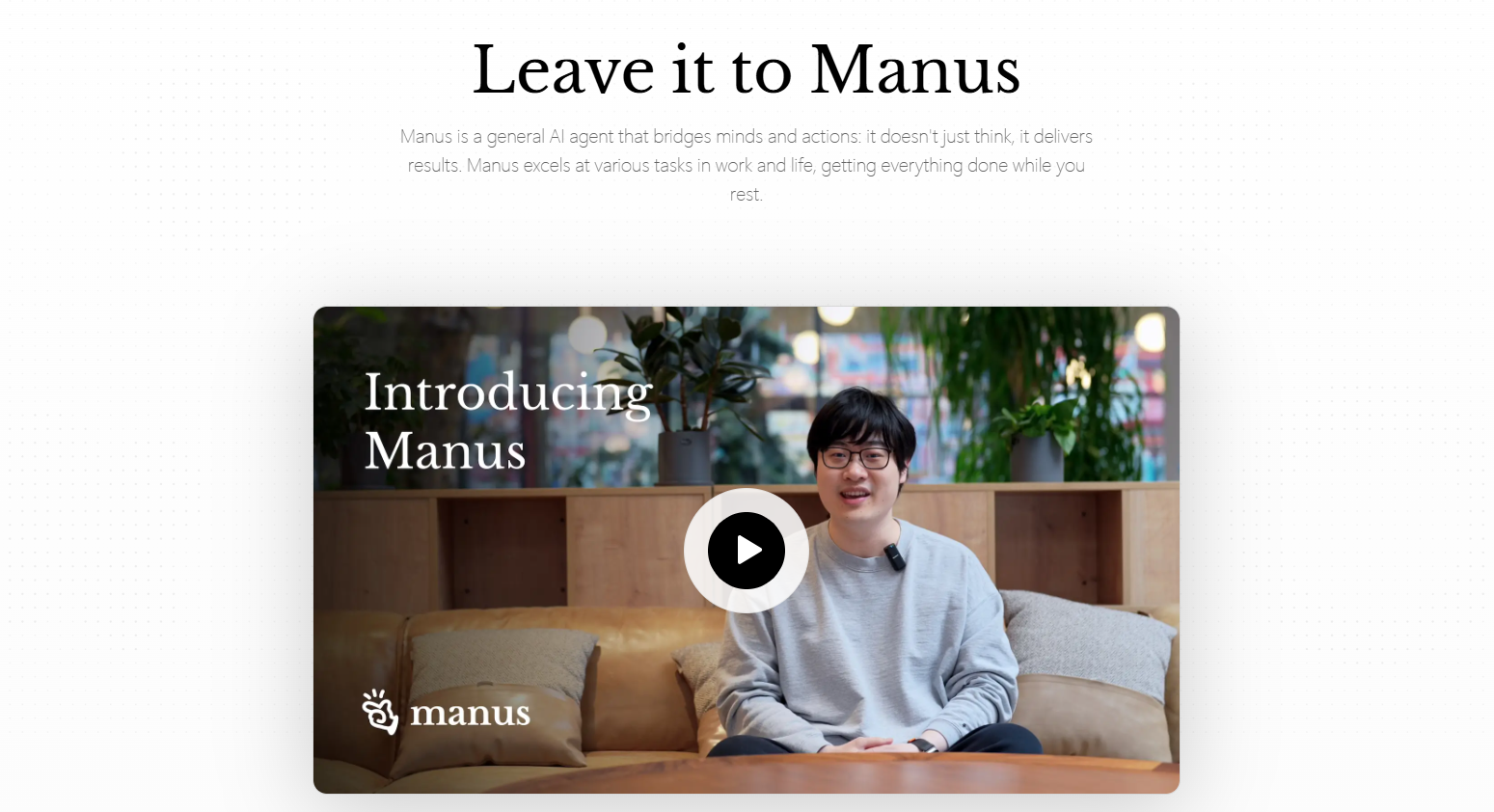
The AI agent can also plan trips, analyze stocks, and even interact with live web pages in real time. Monica shared a demo video that showcases Manus browsing the web, gathering data, and executing tasks without human intervention.
Key Features of Manus AI
Autonomous Task Execution
Manus AI can function independently, even if the user disconnects their device. It continues running in the cloud and completes tasks in the background. According to its developers, the AI can use up to 50 screens, interact with platforms like X and Telegram, and even take screenshots or record browsing activity.
Real-Time Interaction
Unlike conventional AI models, Manus showcases its workflow in real time. When given a task—such as planning a trip—it actively browses websites, gathers information, and displays its thought process while generating results.
Personalization
Manus AI learns from user interactions over time. This allows it to refine its responses and tailor results to individual preferences, making it a more adaptive and intelligent system.
Beyond Text-Based Responses
Manus goes beyond simple text-based results. It can generate various file formats, including PDFs, spreadsheets, and presentations. This makes it useful for professionals and researchers who need structured outputs.
Availability and Future Plans
Currently, Manus AI is only available through an invite-only web preview. Monica has not yet announced a public release date but has hinted at an official rollout in the coming weeks. The company also plans to open-source the model, allowing developers to build AI-driven applications using Manus.
How to Use Manus AI
Using Manus AI is similar to using other AI platforms like ChatGPT. Users provide a prompt, and the AI independently executes the task. For instance, if someone requests a budget-friendly 7-day itinerary for Bali, Manus will research travel options, compile data, and present a structured plan in real time.
Manus AI’s capabilities have sparked discussions about the future of AI agents and their role in automating complex tasks. With its strong performance on benchmarks and increasing global attention, it could become a major player in the AI landscape. Whether it can surpass models from OpenAI and Google remains to be seen, but for now, it is a name to watch.
