
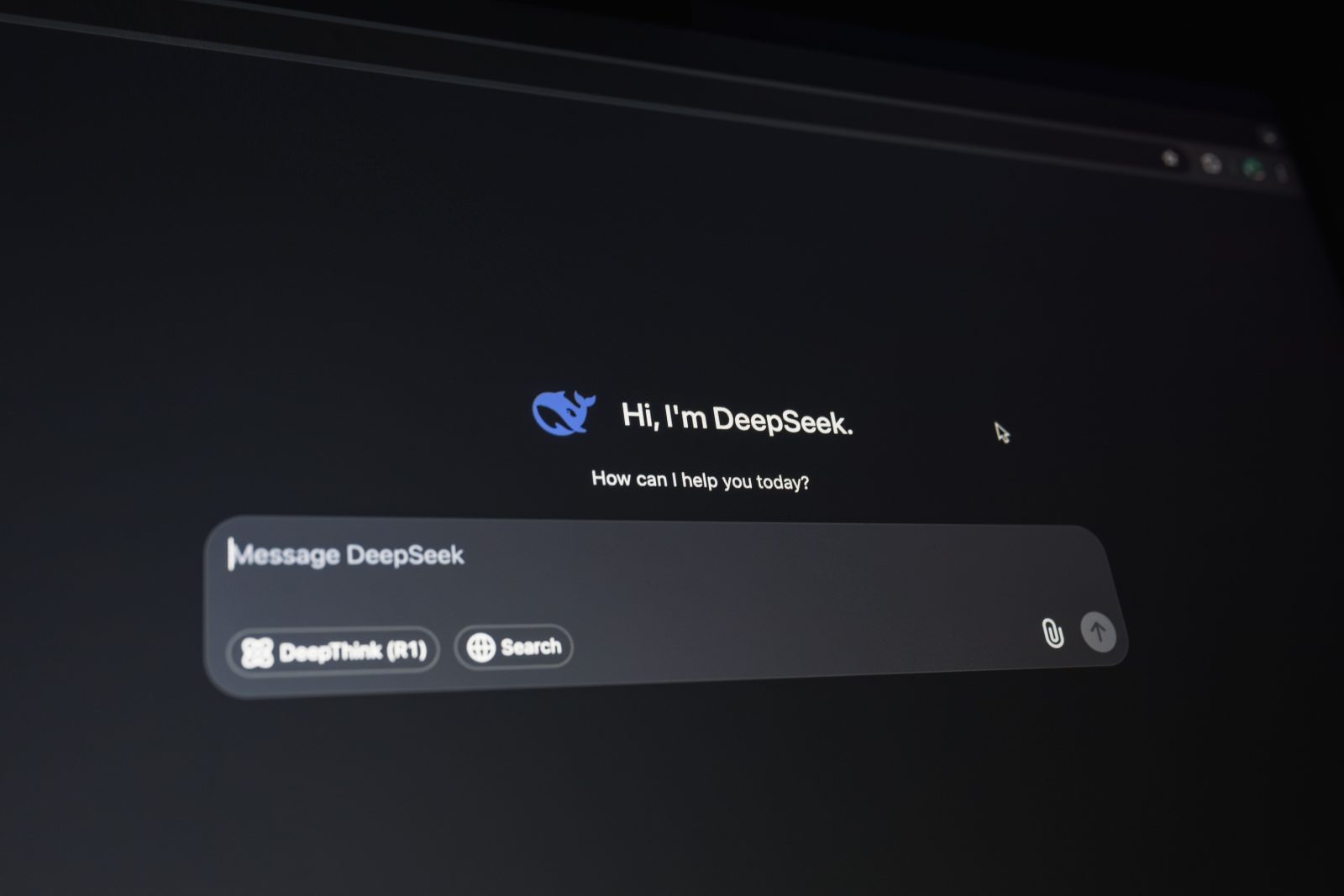

DeepSeek just moved the China AI story from model cards to the substrate that actually decides who can train at scale. On 30 September 2026 the Hangzhou lab said via its official WeChat account that it had open-sourced a suite of programming tools built with Huawei for Ascend AI chips — compute and communication libraries plus an Ascend-tuned version of TileLang, the high-level kernel language DeepSeek now treats as its everyday AGI tooling. Coverage from CNA / Reuters, THE DECODER and the South China Morning Post all land on the same strategic line: this is about building an “independent, self-controlled” GPU software stack that does not assume Nvidia’s CUDA will always be available.
The product detail that matters for search watchers is not a new chatbot skin. DeepSeek says Huawei “fully supported” the work, and the two firms jointly advanced a 128-chip Ascend 950 supernode, optimising both computation and inter-chip communication. TileLang is pitched as simpler than CUDA while still reaching hardware performance — the classic CUDA-moat argument flipped into a public roadmap. SCMP notes DeepSeek released six software modules that mirror its earlier Nvidia-side open-source tooling, now retargeted at Ascend. That is how ecosystems actually migrate: first the kernels and collectives, then the model release cadence that assumes those kernels exist on day one.
Why should SEOs and GEO practitioners care about a DSL for NPU kernels? Because the agent stacks that crawl, extract and cite publishers run on whatever silicon Chinese labs can buy and schedule. When DeepSeek’s training and inference path hardens on Ascend, the citation behaviour you see in DeepSeek-with-web-search will be shaped by that economics — how many tool-using rollouts they can afford, how fast Flash tiers stay cheap, how often agent loops get cut for cost. Yesterday’s DSec sandbox paper showed the isolation layer for agent training; today’s TileLang drop shows the chip-software layer. Together they are the boring infrastructure that decides whether Chinese agentic search stays experimental or becomes default traffic.
Competitive read: SemiAnalysis and others have been arguing CUDA’s moat is thinning on single-chip inference while remaining thick on multi-chip agent workloads. DeepSeek’s public bet is that an open TileLang + Ascend path can close that gap from the China side. Huawei unveiled next-generation Ascend processors and supernodes roughly two weeks earlier and said it expects wider training adoption next year. Pair that timeline with DeepSeek’s funding chatter and Inner Mongolia Ascend build-out reporting, and you get a 2027 story where “which model won LMSYS this week” is less important than “which stack can schedule 128-chip jobs without Nvidia licence theatre.”
Practical takeaway for international teams monitoring Chinese AI citations: log DeepSeek citation domains after infra drops, not only after consumer app renames. Treat Ascend-native open source as a leading indicator that Flash-tier agent search will keep getting cheaper inside China even if US export rules stay tight. And stop reading DeepSeek as a pure model company — this week it is behaving like a systems lab that happens to ship chatbots. If your China GEO brief still starts with “prompt the app and screenshot the sources,” you are watching the wrong layer.
Opinion: open-sourcing the Ascend path is both patriotism theatre and real engineering leverage. CUDA’s four-million-developer moat will not vanish because one WeChat post landed. But DeepSeek printing TileLang-for-Ascend in public raises the cost for every Chinese rival that wants to stay Nvidia-only while still claiming domestic resilience. For publishers, the near-term effect is more agent traffic trained on farms that no longer need to apologise for their silicon. Get your evidence pages extractable before that traffic compounds.