

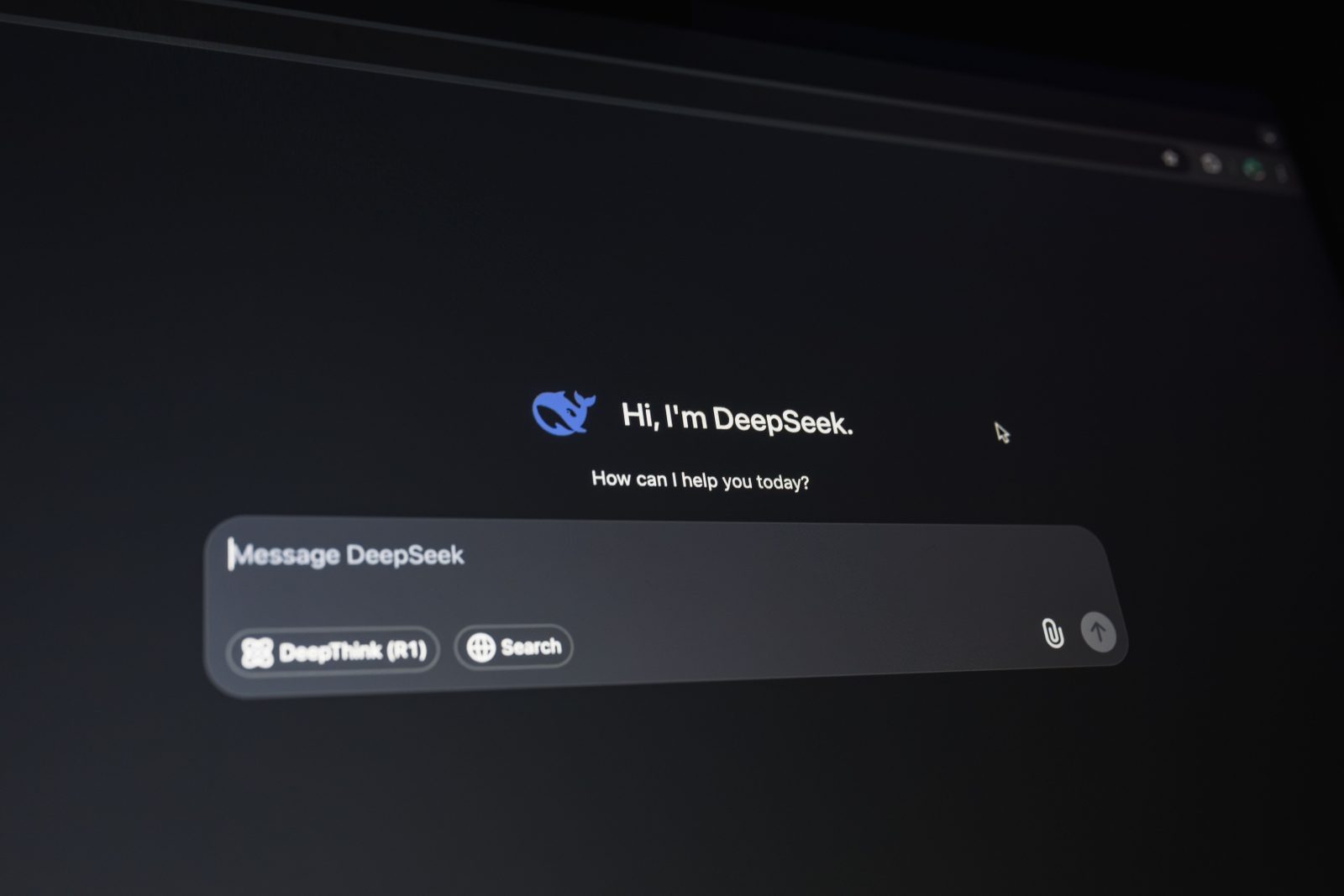

In October DeepSeek opened its in-house search engine to developers as a standalone Search & Fetch API at $0.75 per 1,000 queries. On 13 November it went further: search, deep research and URL reading are now built into the chat model API itself. Any app running on deepseek-flash can switch them on with a single tool declaration (DeepSeek announcement, change log).
That makes DeepSeek’s index the default web for every developer who doesn’t want to wire up search themselves. It’s a bigger deal for visibility than the October launch.
What shipped
The Web Tools guide sets out three capabilities, all running server-side across the Messages, Responses and Chat Completions APIs:
- Web search (
deepseek_web_search, thinking off): the model decides whether to search, can fire several queries per call, and answers with citations. Image search is part of the same tool. - Deep thinking search (same tool, thinking on): over multiple reasoning steps the model searches, opens pages and runs find-in-page, making “up to about 20 tool calls” before it answers.
- URL reading (
deepseek_read_url): the model fetches up to 10 links pasted into the last user message. Long pages are truncated when several are read at once.
Developers can’t force a search: naming the tool in tool_choice returns a 400 error. They also can’t restrict domains. allowed_domains, blocked_domains and user_location are explicitly unsupported. Public-facing apps must turn on safety checks, and pages that fail review come back as url_not_allowed. Pricing is the same as the standalone APIs: $0.75 per 1,000 searches or fetches plus tokens, which WebProNews notes is under a tenth of the $10 per 1,000 that OpenAI and Anthropic list. DeepSeek also open-sourced a chat-demo client that can import DeepSeek chat history.
The SEO details worth reading twice
- The model decides which pages to open. In deep search, the model chooses which results to open and which strings to look for. A page whose title and snippet don’t make the answer obvious may never get opened.
- Developers get your page’s metadata, not its text. Results return URL, title, snippet, site name, favicon and
page_age. Opened pages return URL, title and publication time; the page text itself stays encrypted. Your title, snippet text and a clear, machine-readable publish date are what developers and their users see. - Freshness is a first-class field.
page_ageandpublished_atappear on every result. If your dates are missing or ambiguous, expect to lose out on time-sensitive questions. - No domain filters means no escape hatch. Third-party apps can’t whitelist “trusted” sites. They get whatever DeepSeek’s ranking, and its claimed filters for “SEO spam, GEO manipulation and low-quality AIGC”, return.
My take
This is the cheapest way any major lab sells grounded answers, and it turns DeepSeek Search from a product into infrastructure. Chinese developers building chatbots, customer-service agents and vertical assistants now get DeepSeek’s index almost for free. Many will never compare it with Baidu’s ¥4.9 API or Tencent’s. So the question “do I rank in DeepSeek?” stops being about one app and becomes about thousands of apps you’ll never see. Check your bot rules aren’t blocking crawlers and fetchers you haven’t identified (DeepSeek hasn’t published a crawler user agent), make sure your titles and dates are unambiguous, and that the key facts sit high on the page, because a find-in-page agent will look there first.