

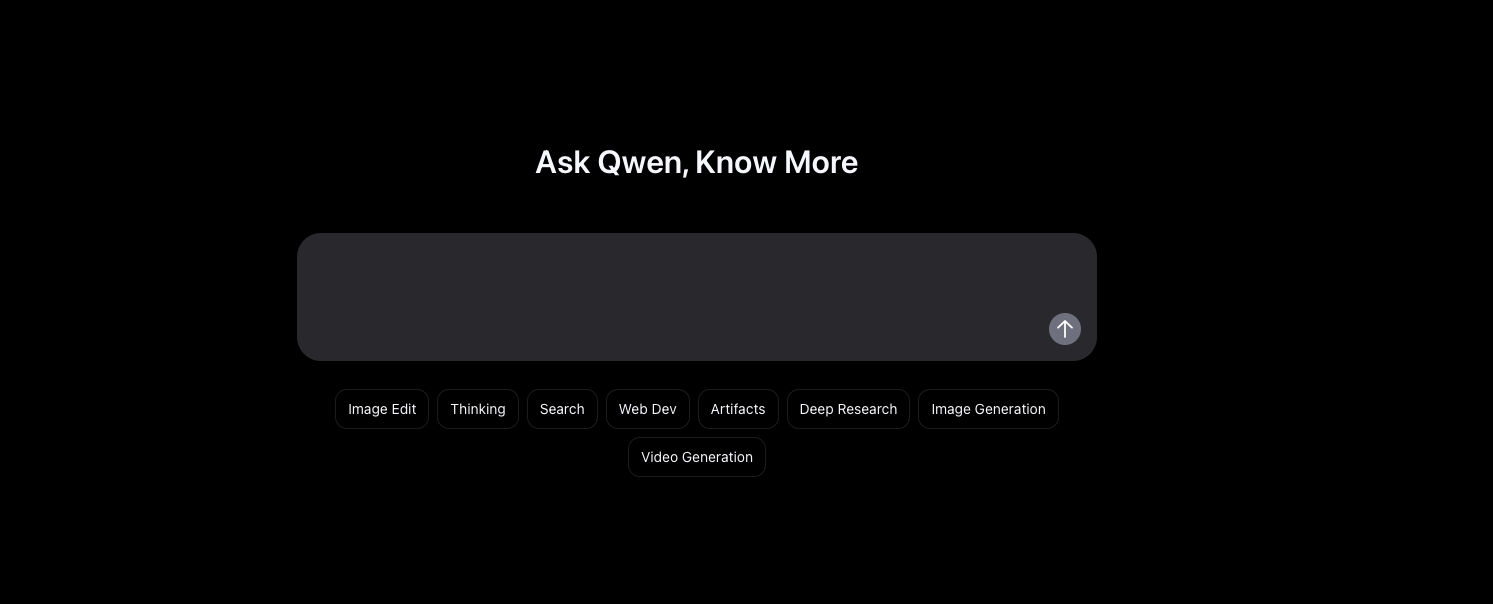

Qwen comes up in almost every conversation about Chinese AI now. It sits behind Alibaba’s consumer app, inside Taobao and Amap, behind Apple Intelligence in China and in a growing number of Western products that run open-weight models. For people who are new to it, though, the name is confusing, because “Qwen” can mean a family of models, a chat app, a cloud API or a toolkit for building agents. This guide sorts those out, explains what Qwen agents actually are, and shows where a search or research team can sensibly start. It reflects what Alibaba and the Qwen team had published as of 25 October 2026.
What Qwen is, and who makes it
Qwen is the family of large language and multimodal models built by the Qwen team at Alibaba Group. In Chinese it is Tongyi Qianwen (通义千问), usually shortened to Qianwen (千问). Alibaba Cloud first showed Tongyi Qianwen in April 2023, and the first open-weight models, Qwen-7B and Qwen-7B-Chat, went up on Hugging Face and ModelScope on 3 August 2023, according to the original Qwen GitHub repository. Since then the team has released new generations at a fast pace: Qwen1.5, Qwen2, Qwen2.5, the QwQ reasoning models, Qwen3 in April 2025, and in 2026 the Qwen3.5, 3.6, 3.7 and 3.8 lines. Our Qwen model update history lists the releases one by one.
The quickest way to stop the name being confusing is to keep four things apart:
- The models. These are the trained neural networks, with names such as Qwen3.8-27B or Qwen3.6-35B-A3B. The number after the generation is the size in billions of parameters. “A3B” means a mixture-of-experts model that uses about 3 billion parameters for each token, even though it holds far more in total.
- The consumer app. Qwen Chat on the web (chat.qwen.ai) and the Qwen (千问) app in China are products for ordinary users. They bundle a model with search, file reading, image tools and, increasingly, agents that act on the user’s behalf.
- The API. Developers reach hosted Qwen models through Alibaba Cloud Model Studio, also known as Bailian and, in older documents, DashScope. Model IDs there, such as
qwen3.8-maxorqwen3.8-flash, do not always match the open-weight names one to one. - Qwen-Agent. This is an open-source Python framework, published on GitHub, for building applications that let Qwen models use tools, plan, read documents and keep memory. The Qwen team says it is also the backend of Qwen Chat.
When someone says “Qwen answered this”, it helps to ask which of the four they mean. A test in the app, a call to the API and a model running on a laptop can behave quite differently even when the model name looks the same.
Text, vision, audio, code and reasoning
The early Qwen models handled text only. Today the family covers most kinds of input. The main branches are:
- General language models for writing, summarising, translation and question answering. Recent generations from Qwen3.5 onwards are natively multimodal, so the main models can read images as well as text.
- Vision-language models (the Qwen-VL line, up to Qwen3-VL) for reading screenshots, charts, documents and photos.
- Omni models, which take text, images, audio and video in one model. Qwen3.8-Omni-Flash, added to Model Studio in September 2026, is the latest of these.
- Coding models such as Qwen2.5-Coder and Qwen3-Coder, plus the Qwen Code command-line tool. Coding is also a main selling point of the general 3.6, 3.7 and 3.8 models.
- Reasoning, or “thinking”, models. QwQ-32B in March 2025 was a separate reasoning model. Since Qwen3, most models have both a thinking mode and a non-thinking mode in one model.
- Image, speech and translation models, including Qwen-Image, the Qwen-Audio speech recognition and text-to-speech models, and Qwen-MT for translation.
Thinking mode is worth understanding before you use the API. The model writes hidden reasoning before its answer, and those tokens usually count towards the output limit and the bill. In one independent test we covered, low output limits left a share of Qwen3.8-Flash answers empty because the reasoning used the whole budget. For simple extraction or classification jobs, switching thinking off is often faster and more reliable.
Hosted or open-weight, and why the licence matters
Qwen is often described as “open source”, but that is only true for some models, and the terms differ from model to model.
Hosted-only models, such as the Max and Plus tiers (Qwen2.5-Max, Qwen3-Max, Qwen3.6-Plus, Qwen3.7-Max), run on Alibaba Cloud. You cannot download them. You send your prompt to Alibaba’s servers and get an answer back.
Open-weight models can be downloaded from Hugging Face or ModelScope and run on your own hardware or with a hosting provider. Many, including the Qwen3 series and Qwen3.8-27B, use the permissive Apache 2.0 licence. Others do not. Some earlier models used the Tongyi Qianwen or Qwen research licences. The largest open release, Qwen3.8-2.4T-A95B, has its own Qwen3.8-Max licence. Under that licence, very large products must display the model name prominently, and companies running a model-as-a-service or AI work-assistant business with more than US$50 million in revenue over twelve months need a separate licence from Qwen. Always read the licence file on the exact model card before you build on it. Do not assume that one Qwen model’s terms apply to another.
Open weights matter for search people too. Because anyone can host them, Qwen models now appear in products that have nothing to do with Alibaba. Ecosia, for example, said in October 2026 that it was moving to open-weight models including Qwen, hosted in Europe. In cases like that, the server, the data policy and any web retrieval belong to the host, not to Alibaba.
Where a beginner should start
- Try the chat app first. Qwen Chat lets you compare models, upload documents and switch thinking mode on and off without writing any code. Keep confidential material out of it until you have read the privacy terms.
- Read the model cards. The Qwen pages on Hugging Face list context length, supported inputs, recommended settings and the licence for every open model.
- Move to the API when you need repeatable results. Model Studio offers OpenAI-compatible endpoints, so tools and code written for other providers often work after changing the base URL and model ID. Check which region you sign up in, because the model line-up and data handling differ between deployments such as Beijing and Singapore. Check current pricing on Alibaba Cloud’s own pages too. We don’t quote prices here because they change often.
- Run a small model locally if privacy matters. Small open-weight Qwen models run in common local tools such as Ollama, and larger ones run on GPU servers with vLLM. The Qwen-Agent documentation describes both routes. Running locally keeps your data on your own machine, but quality and speed depend on your hardware.
What a “Qwen agent” actually is
A chatbot answers. An agent acts. In practice, an agent is a model running in a loop: it reads the task, decides whether it needs a tool, calls that tool, reads the result and carries on until it can give a final answer. The tool might be a web search, a calculator, a code interpreter, a database query or a website action such as checking an order.
The key mechanism is function calling, also called tool use. The developer describes each tool to the model: its name, what it does and which parameters it takes. The model does not run anything itself. It returns a structured request, for example “call search with the query ‘Naver Smart Place rules’”, and the application decides whether to run it, runs it and passes the result back. That split matters for safety. Whoever writes the application decides which tools exist and what they are allowed to touch.
Qwen-Agent packages this pattern up. According to its README, it provides model wrappers with function calling, a base class for custom tools, ready-made agents such as an Assistant that reads PDFs, a Code Interpreter, retrieval (RAG) support and support for the Model Context Protocol (MCP), the open standard for connecting models to outside tools. It can work with the Model Studio API or with a self-hosted, OpenAI-compatible server. The project also warns that its example Python executor is not sandboxed and is meant only for local testing. That warning is a good habit to carry into any agent work.
On the consumer side, Alibaba is moving the same way. In October it opened a waitlist for Qwen Go!, a personal agent inside the Qwen app that early users say negotiated a flight-delay refund and claimed Taobao price protection. At the Apsara Conference in September, Alibaba also presented Qwen Intelligence for agentic phones, with HONOR as the first partner, alongside a Qwen 4 that it says is still in training.
Retrieval is not training
Beginners often mix these up, and the difference matters to anyone who publishes content.
- Training is how the model learnt in the first place. It is fixed at a cut-off date and cannot be updated per question.
- Retrieval means fetching documents at the moment of the question, from the web, a search index or your own files, and giving them to the model to read. This is what RAG means.
When Qwen gives an up-to-date answer that cites sources, retrieval is doing the work. Model Studio has a web search feature with several strategies, and on some endpoints it can return the source titles and URLs. As we noted when we looked at that tool, whether a user ever sees those sources depends on the endpoint and on how the developer builds the app. Retrieval is also where your pages can be read and quoted, so clear, crawlable, factual pages matter more than hoping to be “in the training data”.
Realistic uses for SEO and research teams
- Multilingual research. Qwen is strong in Chinese, which makes it useful for summarising Chinese-language documentation, forum threads and news before a human checks the original.
- Content and site analysis. Grouping keywords into topics, drafting meta descriptions or flagging pages with thin content, on data you are allowed to use.
- Checking AI visibility. Asking Qwen Chat or the API, with search on, how it describes your brand or topic, and logging which domains it cites. Use the same region, model and settings each time, otherwise the results aren’t comparable.
- Small internal agents. For example, an agent that reads your own sitemap or exported reports and drafts a summary, with no write access to anything live.
Two rules apply to all of these. Only scrape, query or automate sites and accounts you have permission to use, and respect robots.txt and terms of service. And check every fact against its source, because models can still invent quotes, dates and figures, and an agent with search can confidently cite a weak page.
Costs, privacy and safety caveats
Costs. Hosted models are billed by input and output tokens, and search or tool calls can add extra charges. Thinking mode raises output tokens. Long contexts of up to a million tokens are possible on some models, but they cost more and run more slowly. Check Alibaba Cloud’s current pricing page for your region before running anything at scale.
Privacy and jurisdiction. Prompts sent to the hosted API or app are processed on Alibaba’s infrastructure under the terms for your region. Some organisations, and some government bodies, restrict Chinese-hosted AI services. Self-hosting open weights avoids sending data to Alibaba, but it makes you responsible for security.
Agent safety. Give agents only the tools and permissions they need. Run code tools in a sandbox, keep a human approval step before anything is sent, bought or published, and log every tool call. These are ordinary precautions for any model, not only Qwen, but they matter more as models become better at acting on their own.
Consumer integration. Qwen also powers Apple Intelligence in China, which regulators approved in October. When a model is built into phones and shopping apps, more questions get answered without a visit to a website, which is why it is worth understanding how these systems retrieve and cite sources.
Further reading
For the earlier context, see our coverage of Qwen2.5-Max and Qwen3.5. The Qwen model update history tracks every major release, and the DeepSeek and ERNIE histories cover the main Chinese alternatives. Official sources: the Qwen blog, QwenLM on GitHub, the Qwen-Agent documentation and Alibaba Cloud Model Studio.