

Dan Taylor is a Partner at SALT.agency and the founder of International Search Insights (ISI), the publication behind ReadIsi. His work is about performance in search, wherever that search happens: making sure brands are chosen, that the answers people get about them are accurate, and that the demand search creates can be measured. He is regarded as one of the West’s leading voices on search engines beyond Google, including Yandex, Baidu, Naver and Cốc Cốc.
What Dan covers
Dan covers search as it now works across the world, not just as it works in one market. That means Google, including AI Overviews, and the AI answer engines people increasingly use in its place, such as ChatGPT and Gemini. It also means the engines that lead in their own markets and are often overlooked by Western marketing teams: Baidu in China, Naver in South Korea, Yandex in Russia, Cốc Cốc in Vietnam, Seznam in Czechia, and the search landscape across the Middle East and North Africa.
The question he keeps coming back to is a commercial one. When an engine or an AI assistant answers a question, is the brand named and recommended, or just used as raw material? Is what it says about products, prices and claims correct? And does the visibility turn into clicks, brand searches and enquiries that a business can actually see? Technical SEO is part of the answer, and Dan has done a great deal of it, but it is the evidence behind the work rather than the point of it.

Speaking
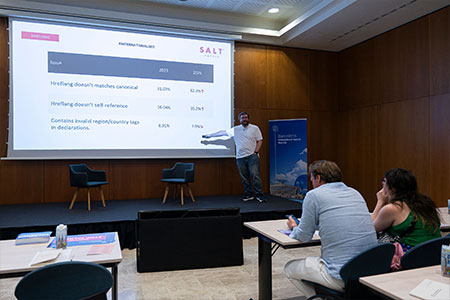
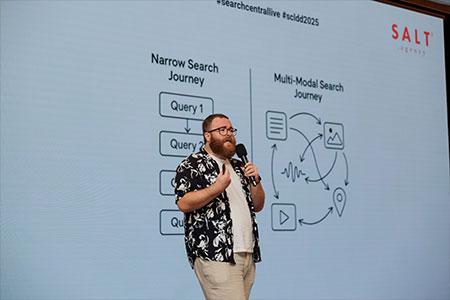
Dan speaks regularly at search and marketing conferences. He has given multiple talks and taken part in panels at the International Search Summit in Barcelona, including research on hreflang and how international sites get it wrong, and discussion of how AI is changing search.
He has also spoken at Optimization in Moscow, the Russian search and marketing conference organised by Ashmanov & Partners, as one of the few English-speaking speakers on its programme. Presenting to an audience that works with Yandex every day is a useful test of whether Western thinking about search holds up outside Google.
On 23 October 2026 he is speaking at the Asia SEO Virtual Summit 2026 on how Asia’s search engines built their own AI answers, looking at Baidu, Naver, DeepSeek, Tencent, Cốc Cốc and Yandex, and what being chosen, accurate and measurable means on each. ReadIsi has a preview of the talk.
His approach
Dan’s starting point is that no single search engine has all the answers. Baidu, Naver and Yandex each built generative answers on their own terms, with their own sources, their own ranking systems and their own ideas about what a good result looks like. Watching how they solve the same problems differently shows what is specific to one platform and what is likely to hold everywhere, Google included.
He applies those lessons with a high bar for evidence. A claim needs a source, whether that is official documentation, a published study, platform data or a test that can be repeated. Patterns seen in one market are treated as a hypothesis until they are checked in another. Where the evidence is thin, he says so, rather than filling the gap with confident guesses. For brands, that means advice built on what can be shown, and measurement that separates being cited from being chosen.
About ReadIsi
ReadIsi is the home of International Search Insights. It covers search engines and AI answer platforms from around the world, with a particular focus on the markets and engines that English-language coverage tends to miss, from Shenma, Sogou, WeChat and Weibo search in China to Alibaba’s Qwen. Alongside news and analysis, it keeps dated records of documented algorithm and product changes for engines such as Yandex, Baidu and Naver, listing only what the companies themselves have described.
The aim is simple: give marketers, SEOs and brand teams working across borders a reliable picture of how each engine actually works, so they can plan engine by engine instead of treating search as one market.
Follow Dan
Follow Dan on X at @TaylorDanRW for updates on global search and AI answers.