

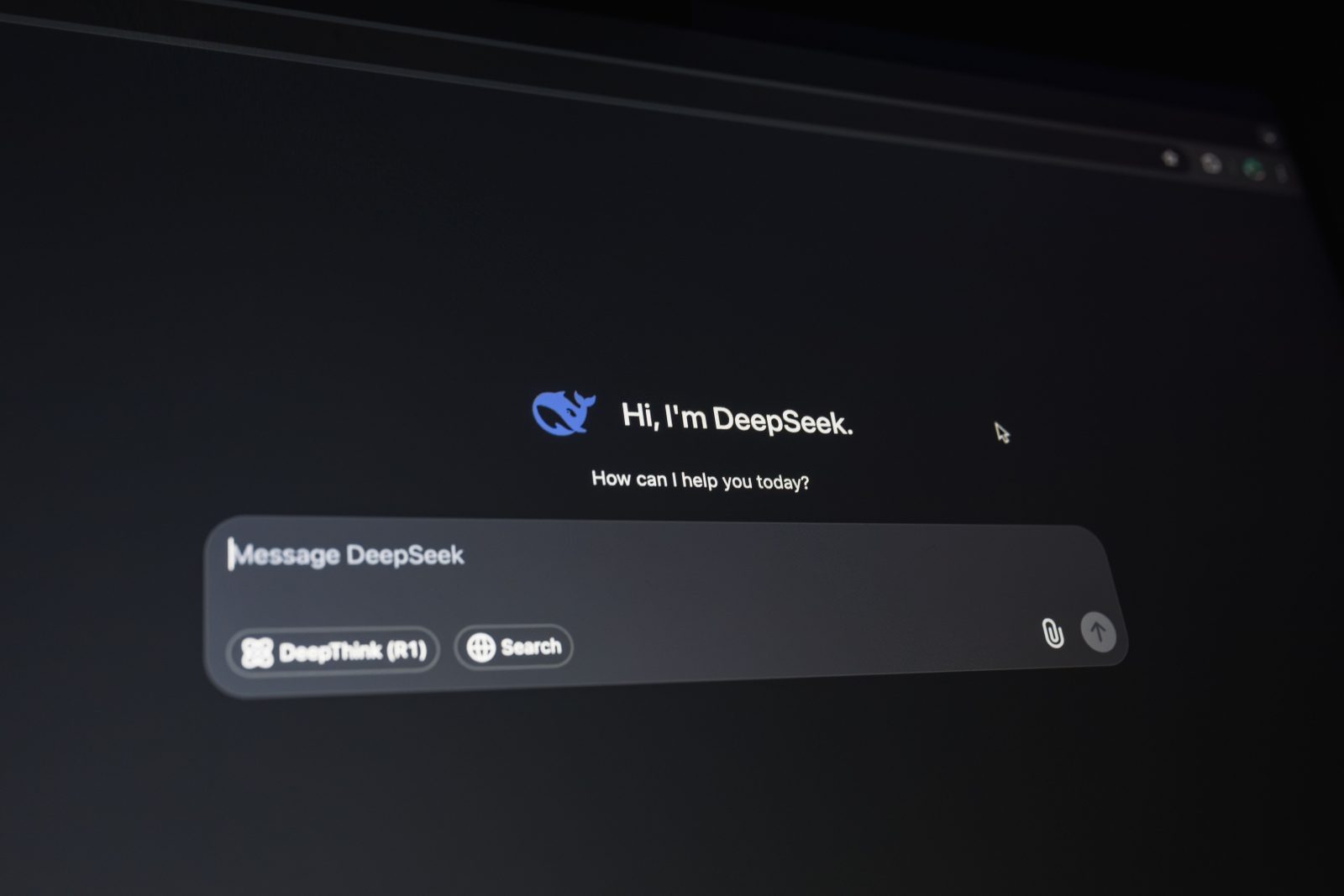

DeepSeek has opened up the search engine behind its chatbot. On Saturday 17 October the company added two raw JSON endpoints to its API, Search and Fetch, and priced each at $0.75 per 1,000 successful requests. The DeepSeek API changelog describes the engine as an “AI-native general-purpose search engine that indexes hundreds of billions of web pages”. It says the engine handles “hundreds of millions of search requests from around the world every day”. It also claims the engine “filters SEO spam, GEO manipulation, and low-quality AIGC through strict detection mechanisms”.
That last line is the one SEOs and GEO vendors should read twice.
What the Search API actually returns
The Search & Fetch guide sets out the details. Search is POST /v1/tools/search. It takes a query of 1–128 characters, a count of 1–50 results (default 10), and an optional ori_question, which is the user’s original question and helps with query understanding. It also accepts an optional IP address for localization, and a need_content flag that returns the page body. The engine supports site:, -site:, exact-phrase and exclusion operators, plus lang:, after: and before:.
The response fields are the interesting part. Each result returns:
- a rerank_score from 0 to 3 that “combines signals such as relevance, authority, and freshness”. DeepSeek says 1.5 or above counts as high quality.
- an authority tier from 0 to 4, or -1 when unknown. DeepSeek says 3 or above indicates “highly authoritative sources”.
- a 100–200 character snippet for display, plus a 600–800 character summary “intended to be read by a model”.
- a publication date in UTC where known, along with the site name and icon.
Fetch (POST /v1/tools/fetch) takes a single URL and returns the page as Markdown. The documentation says fetching “is subject to the target site’s availability and access policies”. It lists a 404 for “a URL blocked by site policy” and a 403 when “the Fetch request was rejected by the security policy”. Rate limits are 100 queries per second for Search and 25 for Fetch, and Fetch also has a per-domain limit. Billing applies only to an HTTP 200 with a non-empty result.
The pricing page adds a catch for agent users. Server-side search and fetch calls made through DeepSeek Harness, Claude Code or Codex already hit these APIs, and they are free for now. Per-request billing starts at 00:00 Beijing time on 1 November, which is 16:00 UTC on 31 October. The same 17 October release note also shipped DeepSeek-V4.1-Flash-1017, an updated open-weight Flash model now served as deepseek-flash. China’s tech press focused on the search price: IT之家 put it at 5 yuan per 1,000 requests.
A published authority score is a big deal
Google has spent two decades saying it has no single “authority” number. DeepSeek has just put one in a public API field, on a 0–4 scale, and attached it to every result it gives to developers’ agents. Whatever goes into that tier will shape which pages get quoted by thousands of RAG apps built on this endpoint, not just by DeepSeek’s own chatbot. That makes the tier worth tracking. If you run a site that matters in China or in Chinese-language queries, I would run a handful of your brand and category queries through this API and record the authority and rerank_score your pages get.
The “GEO manipulation” filter is equally pointed. China’s regulators have already fined three GEO vendors for gaming AI answers. DeepSeek now says its own index screens that kind of content out, though the docs don’t explain what triggers the filter. Expect a new wave of agency pitches promising to “optimise for DeepSeek authority”. Treat them with the same suspicion as the old “Baidu weight” sellers.
What’s missing
The documentation we read does not name a crawler user-agent for the engine that builds this index, and it does not give a robots.txt token for opting out of it. “Access policies” on Fetch is not defined either. That matters, because cheap fetch-on-demand for agents means more automated visits to your pages. Startpage recently said bots now make up 70% of its traffic. If you see a jump in Markdown-style scraping from unfamiliar ranges after 1 November, this is one place to look.
There is also the reliability question. DeepSeek went down for nearly five hours last week and refunded a week of usage. Anyone building a product on a search API needs uptime more than benchmark scores. Still, together with DeepSeek Harness moving to the desktop, this is a clear signal. DeepSeek wants to be the search layer for other people’s agents, not just a chatbot with a search button.